How to calculate workout volume load
For a weighted exercise, multiply the load by repetitions for each set, then add the sets. Keep one unit throughout. Three sets of 60 kg for 10 reps equal 60 × 10 + 60 × 10 + 60 × 10 = 1,800 kg of volume load.
If the reps change across sets, calculate each separately. Writing “3 × 10” when the actual reps were 10, 9 and 8 overstates the work.
| Exercise | Completed sets | Volume load |
|---|---|---|
| Bench press | 60 kg × 10; 60 kg × 9; 60 kg × 8 | 1,620 kg |
| Cable row | 50 kg × 12; 50 kg × 12; 50 kg × 10 | 1,700 kg |
| Workout total | 6 sets, 61 reps | 3,320 kg |
Bench: 60 × (10 + 9 + 8) = 1,620. Row: 50 × (12 + 12 + 10) = 1,700. Total: 3,320 kg. These are illustrative entries, not a training recommendation or a user’s results.
Volume load and working-set count are different
“Training volume” can mean either total load moved or a number of sets. State which measure you mean. The example above has 3,320 kg of volume load and six working sets. Neither number alone tells you how many challenging sets each muscle received.
A working set is a set intended to provide the training stimulus rather than prepare you for it. A hard set also implies substantial effort; a set count without information about effort cannot establish how hard those sets were. Keep warm-ups separate when comparing planned working-set volume.
The Schoenfeld, Ogborn and Krieger meta-analysis (2017) studied weekly training volume in relation to muscle growth using set-volume categories. That is a different question from whether a workout’s tonnage went up. It does not make total kilograms a direct measure of hypertrophy.
Compare volume within the same exercise
Suppose you repeat the bench sets above at 60 kg for 10, 10 and 9 reps. Volume rises from 1,620 to 1,740 kg while set count stays at three. That is 120 kg more volume load, or about 7.4%. The heaviest weight is unchanged.
Add a fourth set instead, and volume may rise without improving performance on any individual set. To understand the change, check load, reps, set count and effort together. Use the progressive-overload log example for that comparison.
- Different exercises: a leg press and a curl move different loads over different ranges. Their tonnage is not a ranking of training quality.
- Different machines: stack labels and mechanics differ. Keep a consistent exercise entry and equipment reference.
- Dumbbells: be consistent about whether the logged weight is per dumbbell or combined; do not switch conventions between sessions.
- Bodyweight work: zero external weight yields zero from weight × reps. It does not mean zero effort or zero benefit.
Read workout volume in Setlane
Log the actual weight and repetitions of every set. After finishing a workout, use its entries to check the work performed. On an exercise’s Stats screen, Pro adds the Volume progress chart alongside Weight, e1RM and Reps.
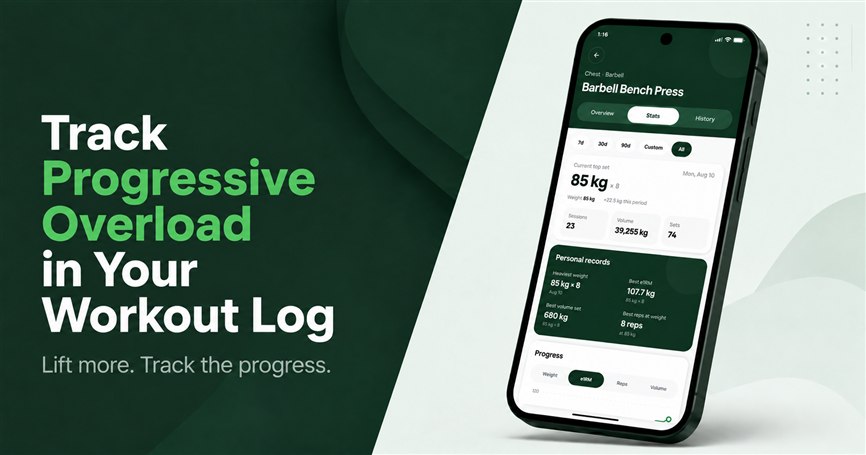
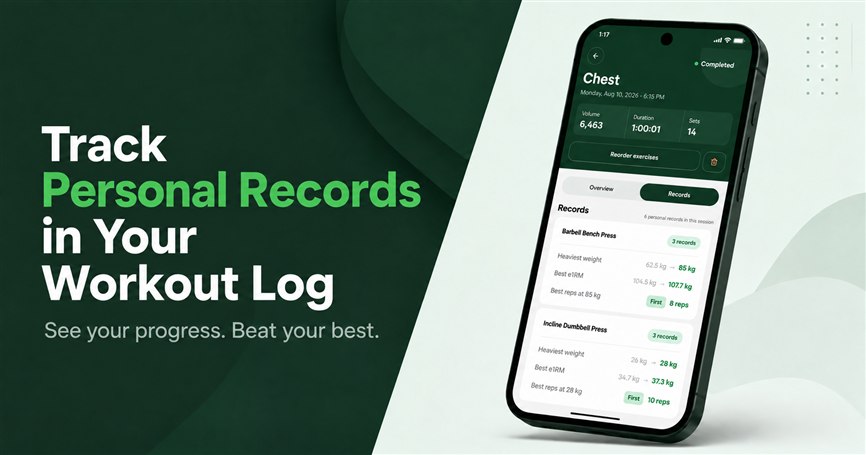
Best volume set in the Personal records card is the highest weight × reps for one set. It is not the total volume of a workout. Read the personal-records guide to see how that differs from a session record.
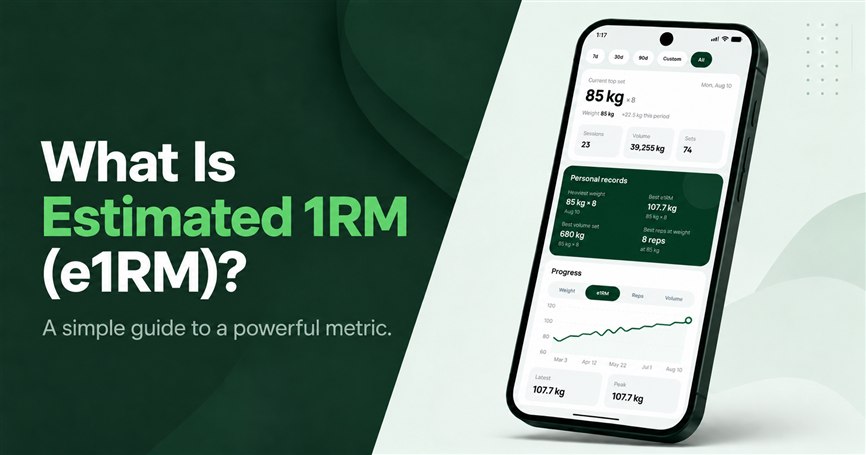
Free includes workout logging and basic Weight progress within its history limit. The Volume chart and Best volume set value are Pro features. If you want to compare performance at different reps, use the e1RM guide and free one-rep max calculator.
Frequently asked questions
What is the formula for workout volume load?
Multiply weight by repetitions for each set and add the results. For 60 kg × 10, 60 kg × 9 and 60 kg × 8, volume load is 1,620 kg.
Does more volume always mean more progress?
No. Adding sets can increase volume without improving performance on a set. Different exercises and equipment also produce different tonnage. Compare similar sessions alongside weight, reps, set count and effort.
Why does a bodyweight set show zero volume load?
If the recorded external weight is zero, weight × reps is zero. That arithmetic does not mean the exercise provided no training stimulus.