A workout tracker becomes part of your training routine: you open it between sets, check what you lifted last time and return to it when you want to understand your progress. The details of that everyday experience matter when choosing an app.
Setlane and Hevy both let you build routines, record weights and reps, time your rest and track personal records. This comparison looks at how they handle workout logging, AI connections and progress tracking, then examines their device support, free-plan limits and prices.
Written by the Setlane team using our product documentation and the official Hevy sources linked throughout this guide. Product details were reviewed on September 13, 2026; the USD pricing comparison retains its September 11 check date.
Setlane vs Hevy at a glance
| What matters | Setlane | Hevy |
|---|---|---|
| Devices | Android | iOS, Android, Apple Watch, Wear OS and web |
| Free routines / custom exercises | 3 / 5 | 4 / 7 |
| History, personal records and progress | Weight, e1RM, reps and volume charts; access depends on plan | Exercise graphs and records; free graphs cover three months |
| AI workflow | ChatGPT or Claude, with read-only or editing access | HevyGPT for ChatGPT; Trainer is a separate Pro feature |
| Training with friends | Focus on your own log and progress | Social feed, profiles, shared routines and leaderboards |
| A reason to choose it | Review your log and make supported changes through your preferred assistant | Keep a log alongside friends, watches and generated programs |
What recording a workout looks like
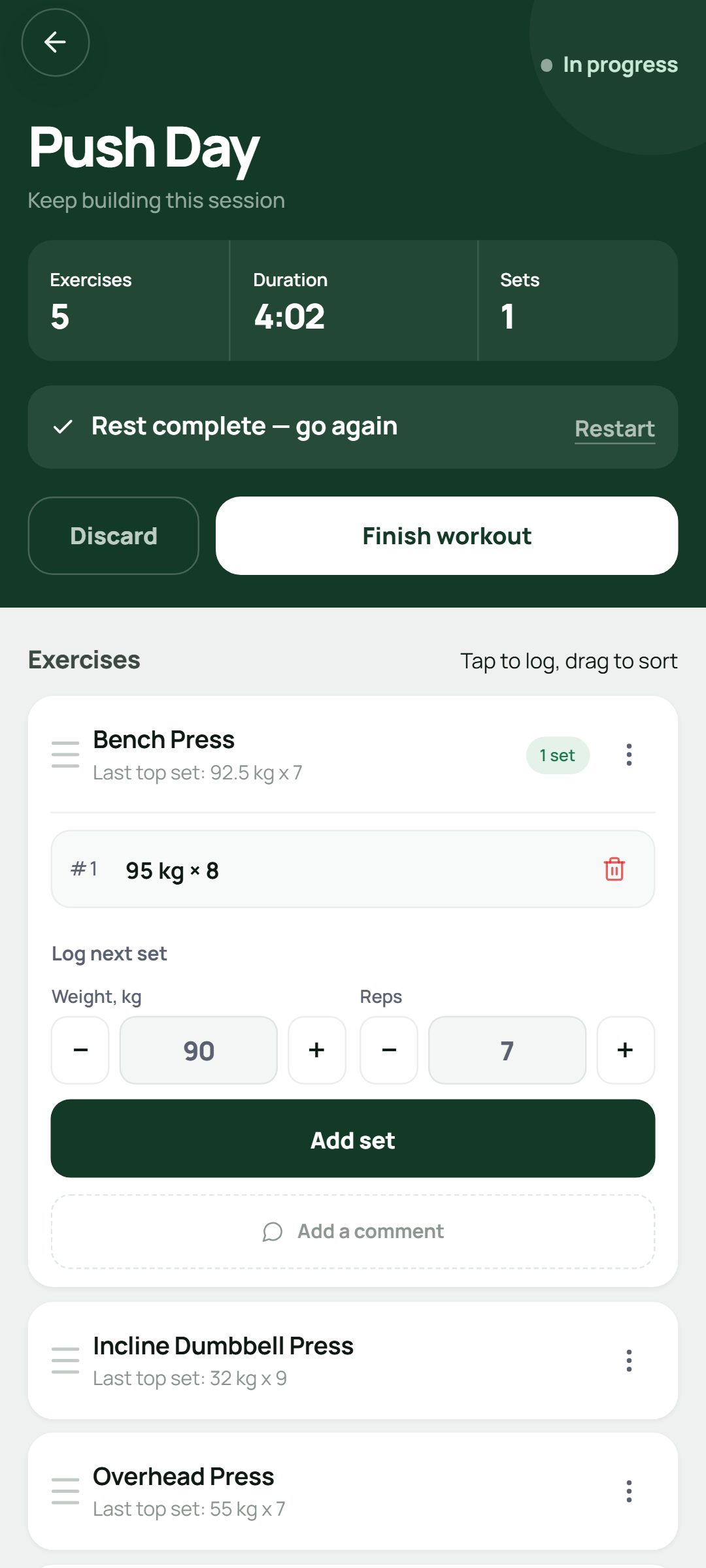
Start with a workout you already know. In Setlane, open your routine, check the previous weight and reps, and record each completed set. The automatic rest timer runs between sets, including with the screen locked. When the session is finished, its entries become part of your workout history and progress statistics. This keeps the same record useful during training and when you review it later.
Once initial sign-in or guest access is established, you can create routines, log sets, use the timer, review accessible history and check personal records offline. Synchronization and AI conversations need a connection. Unsynced sets on your phone are not yet available to an assistant. The offline guide explains that boundary.
Hevy’s feature documentation covers previous workout values, automatic rest timers, notes, supersets, set types and RPE. Those are useful reasons to consider it if your program needs detailed set annotations.
Whichever app you choose, repeat a familiar routine first. Check whether you can find the last performance, correct a mistaken entry and understand the resulting record without rebuilding your whole training system.
History, personal records and progress
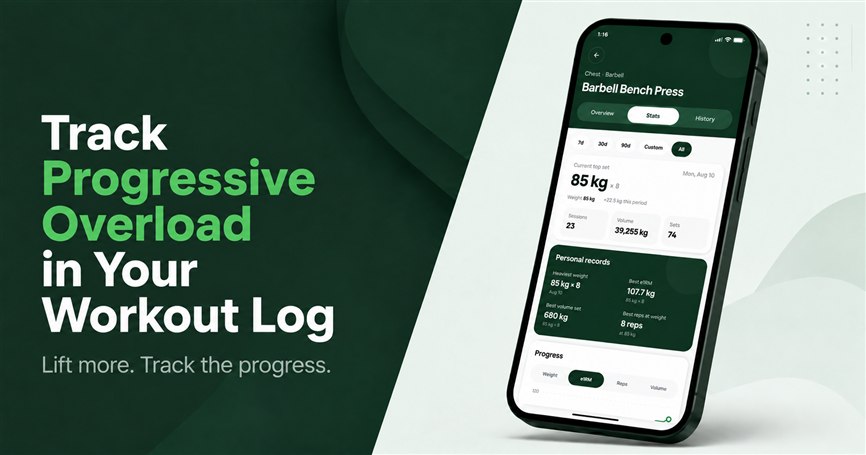
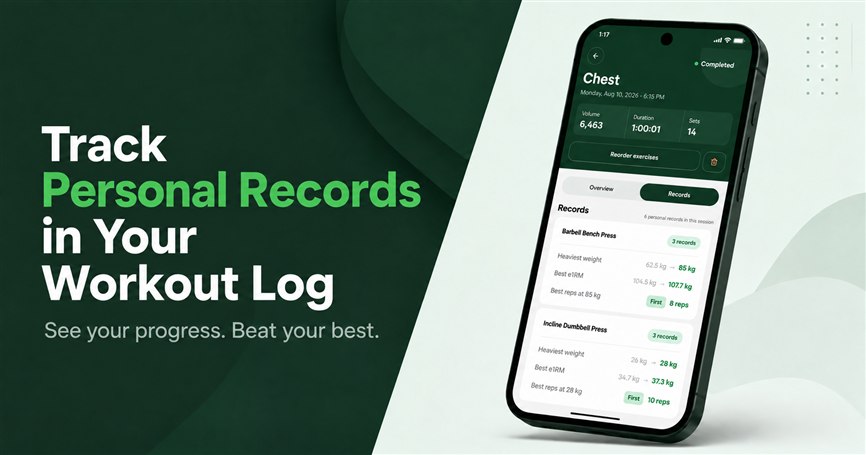
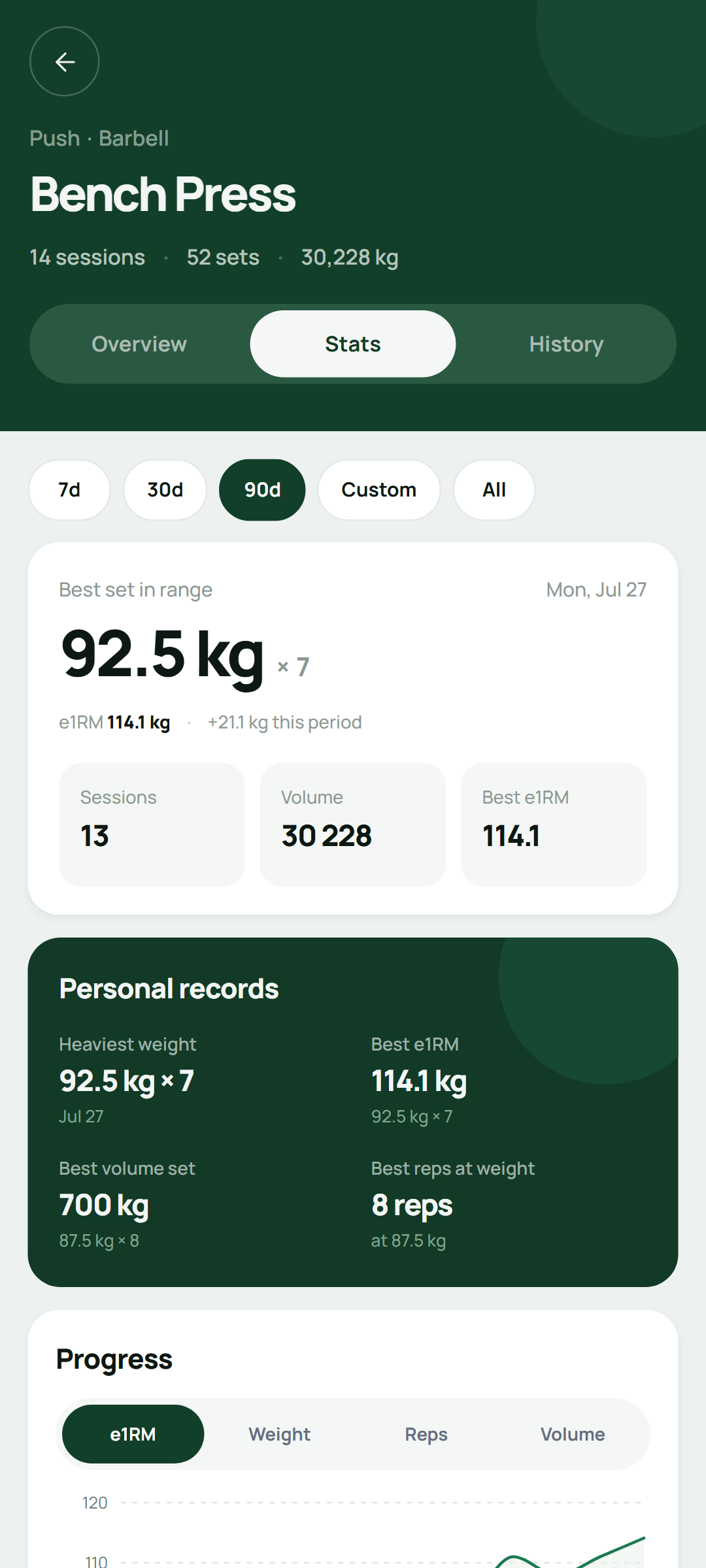
A useful progress screen should help answer a specific question: has your bench press improved over the last month? In Setlane, open the exercise statistics and choose a period. Weight, estimated one-rep max (e1RM), reps and volume show different aspects of your completed training. Personal records highlight your best performances, while workout history lets you return to the sets behind them.
Setlane Free includes the weight chart within its 90-day history window, the heaviest-weight record for an exercise and one highlighted record after a workout. Pro adds e1RM, reps and volume charts, detailed records, full history and custom date ranges. For example, more reps with the same weight can show progress even when the heaviest-weight record has not changed.
Hevy also provides exercise graphs, workout history and personal records, including heaviest weight, one-rep max and best set or session volume. You can inspect the workouts behind an exercise’s results. Its free exercise-performance graphs cover three months; Pro extends the available period. Both apps can help you review a lift, so compare the metrics you use and the access included in your plan.
Build your routine or follow a generated program
If you already have a program, both apps let you organize exercises into routines. In Setlane, choose the exercises and their order, then use the routine when training. You can create and edit routines offline after initial access is set up. This works well when you or your coach decide the program and you want the app to keep its structure and record the work.
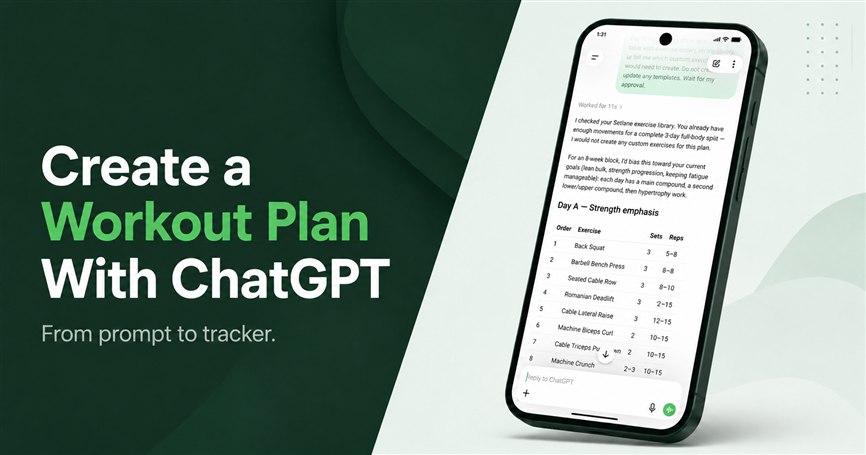
For help building a routine in Setlane, you can discuss your schedule and equipment with ChatGPT or Claude. The connection can save the routine’s name and exercise order. Sets, reps and weights proposed in the conversation are not saved as routine targets. Keep those recommendations available separately and review them before training.
Hevy Trainer, included with Pro, builds a program inside Hevy around your goals, equipment and schedule. It assigns exercises, sets, rep ranges and rest times, with starting weights when enough exercise history exists. Its progression increases a working weight after you reach the top of the rep range on all prescribed sets. That suits someone who wants ongoing program guidance directly in the workout app.
ChatGPT and Claude: compare the actual workflow
Setlane: read your log and approve changes
Setlane connects your account to ChatGPT or Claude. You can ask about completed sessions, exercise progress and records, then allow supported changes such as reordering a routine or correcting a completed set. Choose read-only access if you only want analysis. Editing access does not let the assistant control an active workout.
For example, ask the assistant to compare your last four rowing sessions and identify which sets improved. If a completed set contains a typo, ask it to correct that entry. You decide whether the connection only reads your log or can save supported changes. This is a way to work with the training you have recorded, as well as discuss what to do next.
Free includes 60 Setlane AI tool calls per month. One message can use several calls. Pro removes Setlane’s monthly call cap; access to ChatGPT or Claude and any assistant subscription are separate. See the connection guide for setup and permissions.
HevyGPT: a ChatGPT connection
HevyGPT creates programs in ChatGPT and saves them to Hevy. Hevy’s FAQ also describes training-history analysis. It is available without Hevy Pro within the free routine limit. Hevy currently directs Android users to ChatGPT on the web for this integration. It is a separate feature from Trainer’s in-app programming, so choose the workflow you want rather than treating every AI connection as the same feature.
Phones, watches and training with friends
Setlane is an Android workout tracker focused on your own routines, completed sets and progress. Its ChatGPT and Claude connections give you another way to work with synced data, but they do not replace a dedicated watch app or a browser-based workout logger. If you train with an Android phone and review your own results, that is the everyday setup to evaluate.
Hevy supports iPhone, Android, Apple Watch, Wear OS and the web. Its social features include profiles, a feed, shared routines and leaderboards. If you want to log from a watch or follow friends’ workouts, those are concrete reasons to choose Hevy. They may matter more than a difference in charts or a small subscription saving.
Which free plan fits your routine?
Hevy allows more saved routines and custom exercises on Free: four and seven respectively, versus three and five in Setlane. If you rotate four distinct workouts and do not need Setlane’s assistant workflow, that difference may settle the decision.
Setlane Free provides three months of accessible workout history and basic progress. Older workouts are locked rather than deleted; Pro restores access to the full history and adds advanced exercise statistics, detailed records and CSV export.
Be careful with the word “history” when comparing plans. Hevy’s three-month graph/data limit should not be read as a claim that older workouts are deleted or that the app has the same history-access rules as Setlane. Consult Hevy’s current Free/Pro breakdown for the limits that matter to you.
Setlane and Hevy prices in USD
The figures below are the published dollar prices checked on September 11, 2026. Introductory offers are separated from renewal prices so the first year does not hide the ongoing cost.
| Plan | Setlane Pro | Hevy Pro |
|---|---|---|
| Monthly | $4.99 / month | $2.99 / month |
| Annual | $19.99 first year; then $29.99 / year | $23.99 / year |
| Lifetime | $49.99 launch offer through September 30, 2026; then $69.99 | $74.99 |
Setlane’s advertised annual offer includes a 14-day trial for eligible users. Lifetime is a one-time purchase. Prices can change; confirm the offer before purchasing. Sources: Setlane pricing and Hevy’s published Pro prices.
At these prices, Hevy costs less monthly and on annual renewal. Setlane’s first-year annual offer is lower, as is its listed lifetime price. Choose the feature set you will use before deciding which payment period makes sense.
Switch without losing your reference log
Start with one routine and keep your Hevy history available while you try Setlane. Recreate the exercise order and record a normal session. Compare the process after a few workouts, when you have real entries to review.
For a move to Setlane, recreate your routines manually and keep an export of your Hevy history as a reference. Setlane Pro exports logged workout-set rows to CSV; that export is not a full backup or a Hevy import tool. Keep your original history available while you decide whether to switch.
Which should you choose?
Choose Setlane if you train on Android and want to review your own log with ChatGPT or Claude, with a clear choice between reading data and allowing supported edits. You can keep gym logging offline and use the assistant after syncing.
Choose Hevy if its social community, watch apps, broader device support or Trainer programming matter more. Its more generous free routine limit and lower recurring Pro prices are also meaningful advantages.
If neither fits, our five Hevy alternatives cover other choices for a free Android log, manual routines and structured programs.
Frequently asked questions
Does Hevy work with ChatGPT?
Yes. Hevy documents HevyGPT for creating and saving programs through ChatGPT, and its FAQ also describes training-history analysis. Setlane offers a separate connection for ChatGPT and Claude with read-only or editing access.
Is Setlane cheaper than Hevy?
It depends on the plan. At the USD prices checked on September 11, 2026, Hevy has lower monthly and annual renewal prices. Setlane has a lower first-year annual offer and a lower listed lifetime price.
Can I import my Hevy history into Setlane?
To try Setlane, recreate a routine manually and keep your Hevy history available for reference. Setlane’s CSV export is for taking your logged sets out of Setlane; it does not import Hevy workouts.