What is a warm-up set?
A warm-up set is a lighter set of the exercise you are about to train. A few minutes on the bike raise your temperature, but only warm-up sets let you practise the exact movement: you feel the bar path, check your grip and stance and get used to the load before it gets heavy.
Warm-up sets versus working sets
What makes a set a warm-up is its job, not its weight. 60 kg can be a warm-up for one lifter and a top set for another. Working sets are the ones you are trying to progress; warm-ups exist so that those sets go well. Keep the two apart in your log, otherwise a session with five warm-ups looks like a big jump in volume.
A simple ramp to start with
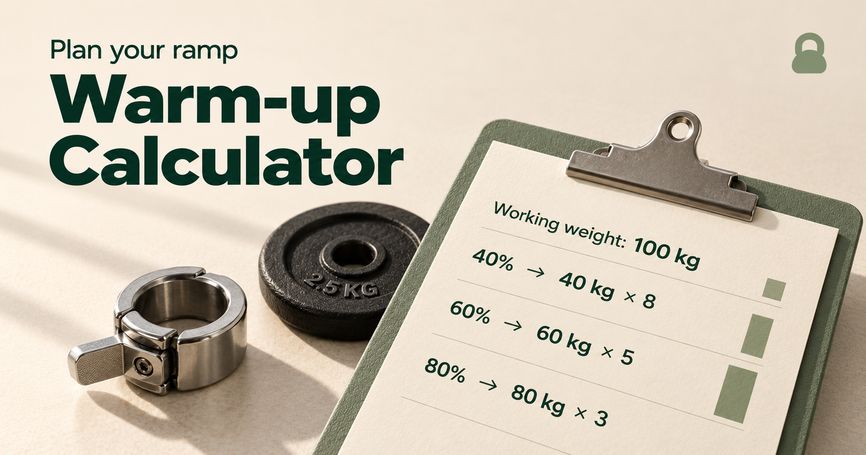
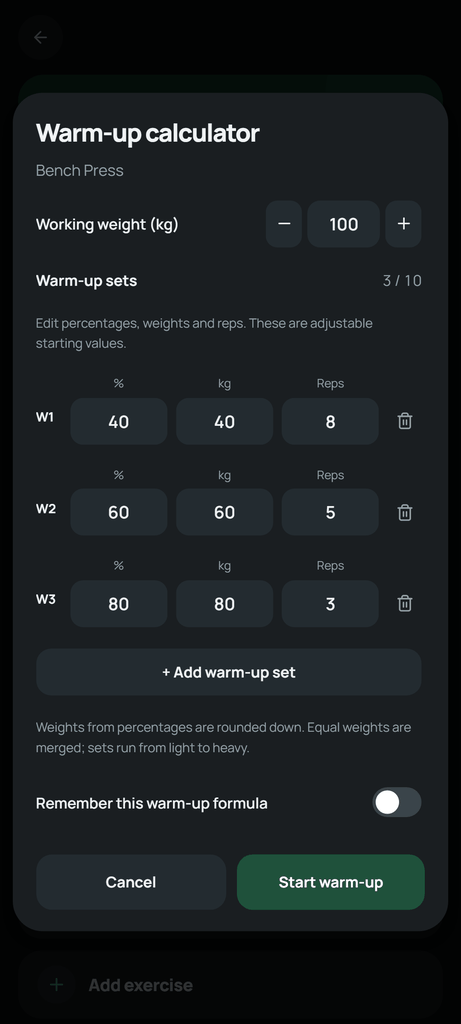
For most compound lifts in the 5 to 10 rep range, this ramp works well. The percentages refer to your working weight for the day, not your one-rep max.
| Step | Load | Reps |
|---|---|---|
| 1 | 40% | 8 |
| 2 | 60% | 5 |
| 3 | 80% | 3 |
| Then | 100% | Working sets |
It is also the default in Setlane’s warm-up calculator. Two things make it work: the weight goes up while the reps come down, and the last step is heavy enough to feel the working weight without tiring you.
When to use more or fewer steps
- Add a step before heavy sets of three reps or fewer (for example 90% × 1), on the first big lift of the day, or when the gap between the empty bar and your working weight is large.
- Drop a step for the second exercise on the same muscles, or when the working weight is light. If you bench 40 kg, the bar and one set in between are enough.
- Isolation exercises such as curls or lateral raises usually need one light set of 10 to 15 reps.
Studies on warm-ups use very different protocols, and the effect on strength varies between them, so treat this ramp as a starting point and adjust it after a few sessions. [1]
Bench press, squat and deadlift examples
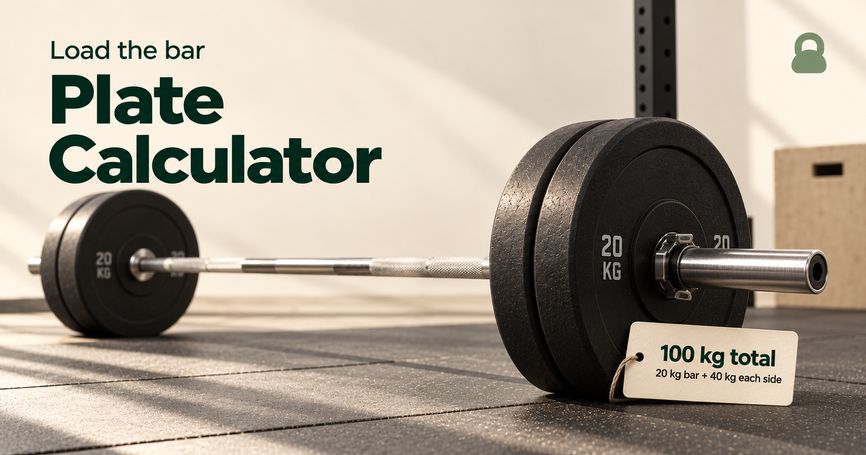
All weights include a 20 kg bar and are rounded to loads you can build with standard plates.
Bench press: working weight of 60 kg
20 kg × 8, 35 kg × 5, 47.5 kg × 3, then 60 kg. Forty percent would be 24 kg, so the empty bar does the job.
Squat: working weight of 100 kg
20 kg × 10, 40 kg × 8, 60 kg × 5, 80 kg × 3, then 100 kg. The extra set with the empty bar is there to find your depth and stance before the bar gets heavy.
Deadlift: working weight of 140 kg
60 kg × 5, 85 kg × 5, 110 kg × 3, then 140 kg. Start at 60 kg rather than the empty bar: with two 20 kg plates the bar sits at the normal height off the floor, so even the first set is a real deadlift.
Rest during the warm-up
Light sets need little more than the time it takes to change the plates. After the last and heaviest warm-up, take one to two minutes so your first working set does not start with leftover fatigue.
How to record warm-up sets in Setlane
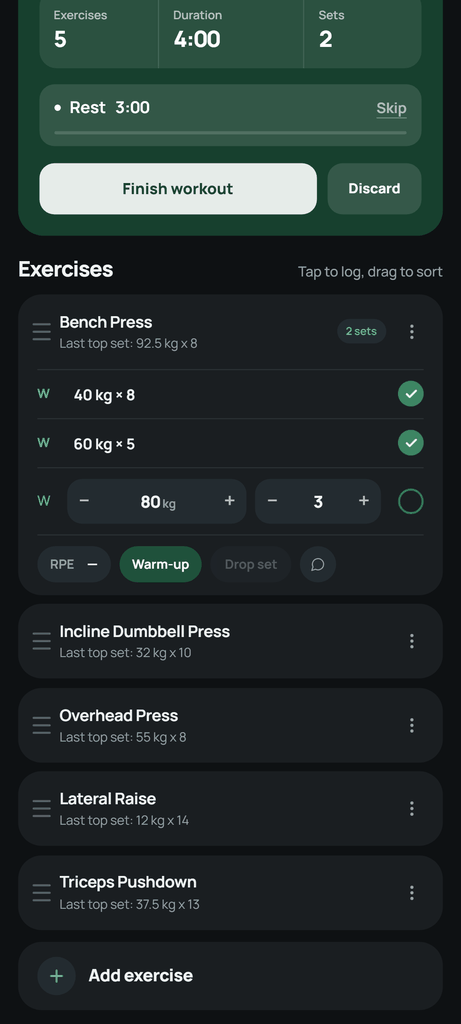
- Open the exercise in your active workout and turn on Warm-up beside the set-entry fields.
- Enter the weight and reps, then log the set. Turn Warm-up off again when you reach your working sets.
- To plan the ramp, open the exercise menu and choose Warm-up calculator. Enter the working weight, adjust the percentages and reps if you want, and apply the plan.
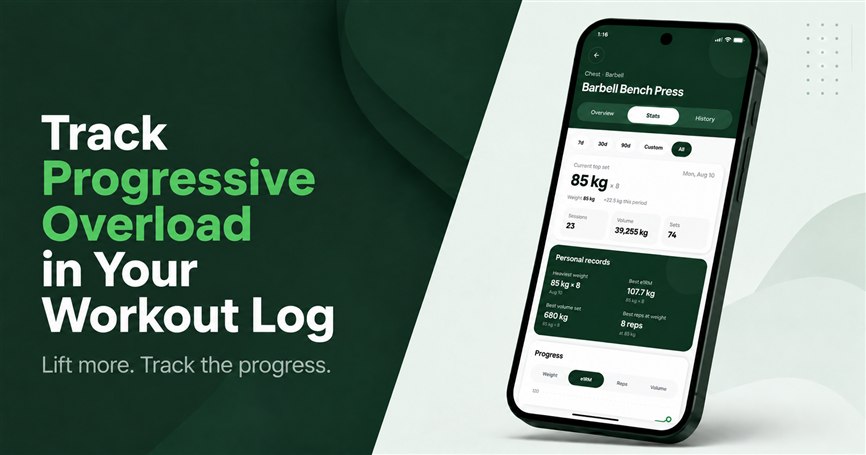
The calculator rounds each load to your equipment settings. Sets marked as warm-ups are left out of your volume, set and rep totals, so your progress charts show only working sets. Logging warm-ups and using the calculator are included in Setlane Free.
Save warm-up sets in a routine
In Templates, edit your routine, open the exercise menu and choose Warm-up sets. Set the number of warm-ups and, if you like, percentage-based weights and reps for each one, then save the routine.
Every workout you start from that routine then begins with the warm-up already planned. Setlane prefills the next warm-up as you log each set, and you can still change the weight and reps on the spot.
Common warm-up mistakes
- Warming up for reps. 80% × 8 instead of × 3 spends the energy you need for the working sets.
- Big jumps at the end. Going straight from 60% to your working weight makes the first working set feel heavier than it is.
- The same long ramp for every exercise. After squats, the leg press needs one or two light sets, not four.
- Not marking warm-ups. Your log then shows extra sets and more volume than you actually trained.
A warm-up prepares you for the session; it does not prevent every injury. If something hurts, stop the exercise.
Frequently asked questions
How many warm-up sets do I need?
Usually two to four: two for a light weight or a second exercise on the same muscles, three for a typical compound lift and four or five before heavy sets of three reps or fewer.
Should warm-up sets count toward working volume?
No. They are preparation, and counting them makes your volume look higher than the work you are trying to progress. In Setlane, sets marked as warm-ups are left out of volume and set totals.
Do I need to warm up again for the next exercise?
Only briefly if it trains the same muscles: one or two lighter sets are usually enough. A different movement, such as deadlifts after the bench press, needs its own ramp.
Is the warm-up calculator free in Setlane?
Yes. The warm-up calculator and warm-up set recording are available on Free. You can also use the website calculator without an account.